
SWAP: Do babies expect the same goal when the agent changes?
Although previous studies have shown that even very young infants can be sensitive to differences between faces, many of these studies tested face recognition by presenting two faces side by side and measuring whether babies preferred to look at the novel face.
What we studied and how
In this study, we were interested in how babies understand whether different people can have different goals. Previous research has produced mixed findings: in some situations, infants seem to expect a goal to be shared across agents(Moore, 1999; Buresh & Woodward, 2005; Kampis et al., 2013), while in other situations they appear able to treat different agents as having their own independent goals. One possibility is that this depends on infants’ age (Buresh & Woodward, 2007; Martin et al., 2017). Younger infants may be more likely to generalize a goal from one person to another, whereas older infants may be better able to understand that different people can have different preferences or goals.
Before testing this question in our own setup, we first needed to check something more basic: can younger babies clearly tell the two agents apart in our task? This is important because if babies do not distinguish Agent A from Agent B, then it would be difficult to know whether their response reflects goal understanding or simply difficulty tracking who is who.
In our design, the two agents would appear in separate trials, meaning babies would need to remember a face from an earlier trial and recognize whether a later face was the same person or a different person. We therefore first needed to test whether babies could distinguish the agents under these more demanding conditions.
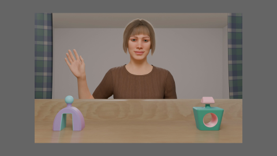 |
 |
Results
Unfortunately, our babies did not show a reliable difference between old-face and new-face trials, either in their looking time or in their pupil dilation. We then revised the task to give babies more time to look at the face during the learning phase. However, the results were still very similar: babies again responded similarly to the old and new faces.
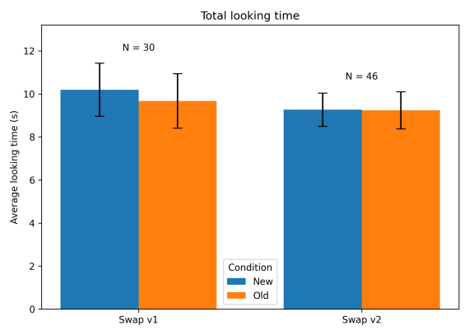
These findings suggest that, in our current task, babies did not show clear evidence of distinguishing between two unfamiliar agents when the faces were presented across separate trials. This does not mean that babies cannot recognize different people in everyday life. Rather, it suggests that our task may not have made the difference between the agents salient enough.
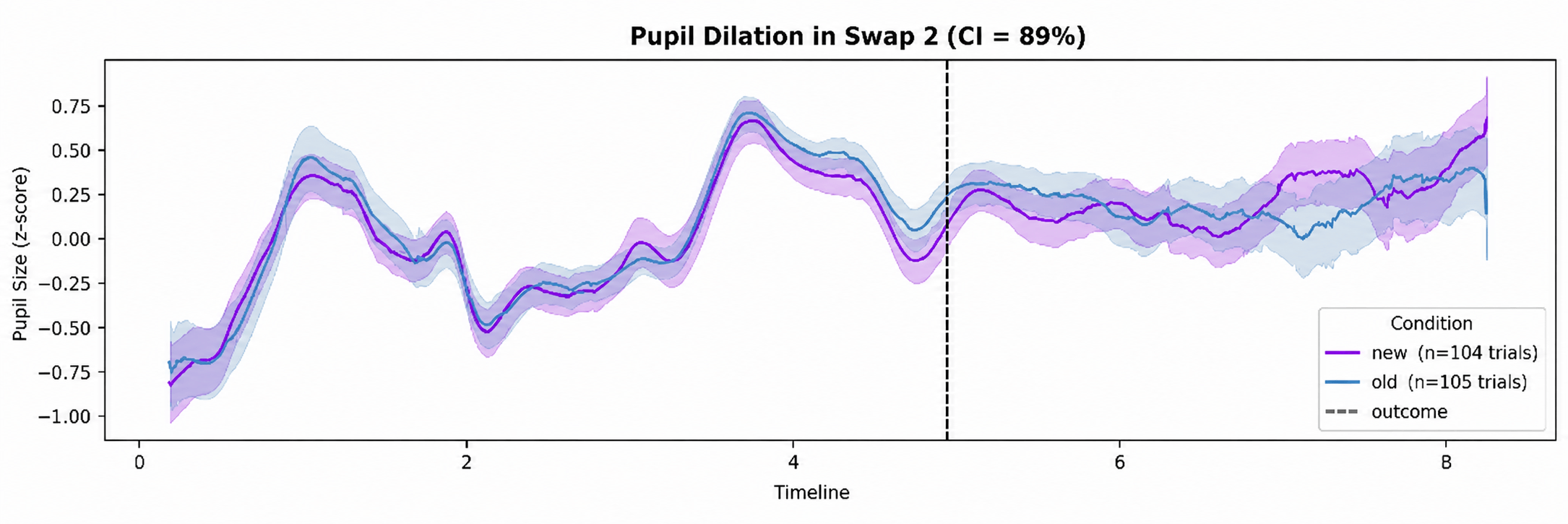
Together, these findings raise a useful caution for interpreting previous “shared goal” findings: before concluding that babies expect different people to share the same goal, we first need to consider whether they clearly encoded the agents as distinct individuals.
Researchers
| Name | Title | |
|---|---|---|
| Peter He | PhD Student |
|
| Velisar Manea | Academic Staff |
|
| Victoria Helen Southgate | Professor |
|
