
Copenhagen Neuropsychology Lab
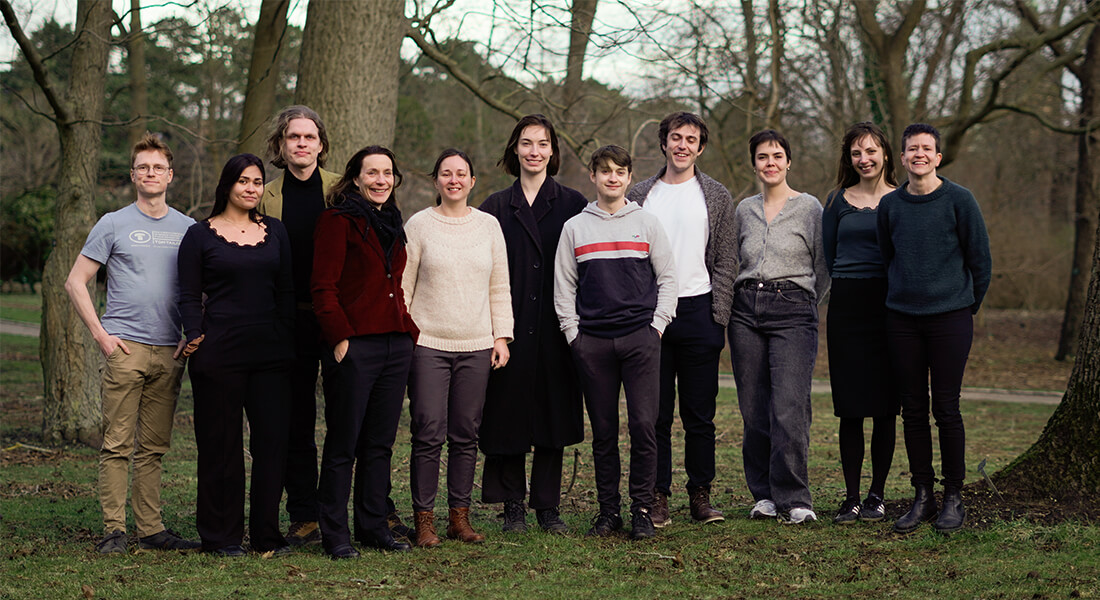
Copenhagen Neuropsychology Lab (CopNL) is a research group working within cognitive and clinical neuropsychology. We conduct experimental and brain imaging studies of the effects of brain injury and neurodevelopmental disorders on cognition, and experimental studies with neurotypical participants.
We are particularly interested in how the brain processes visual information, and how we can assess cognitive and visual impairments following brain injury.
One of our aims is to understand how visual recognition is organized in the brain, by studying participants in whom these processes have in some way broken down, in particular patients with acquired reading disorders (alexia) and people with prosopagnosia (‘face blindness’). We work with researchers from different fields both in Denmark and internationally.
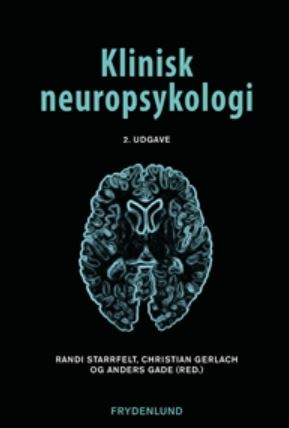
Textbook
|
 |
Book chapters
- Robotham, R. J., Vancleef, K., & Starrfelt, R. (2025). Vision and Perception. In J. B. Nielsen, R. F. Frisk, J. Lorentzen, & L. H. Larsen (Eds.), Neuroplasticity-based Neurorehabilitation (pp. 43-63). Springer Nature Switzerland.
- Barton, J. J. S., Albonico, A., & Starrfelt, R. (2025). The lateralization of reading. In C. Papagno, & P. Corballis (Eds.), Handbook of Clinical Neurology: Cerebral Asymmetries (Vol. 208, pp. 301-325). Elsevier. Gerlach, C., & Robotham, R. J. (2022). Chapter 9 - Object recognition and visual object agnosia. In J. Barton, & A. Leff (Eds.), Neurology of Vision and Visual Disorders (Vol. 178). Elsevier. Handbook of Clinical Neurology
- Starrfelt, R., & Woodhead, Z. (2022). Chapter 12 - Reading and alexia. In J. Barton, & A. Leff (Eds.), Neurology of Vision and Visual Disorders. Elsevier. Handbook of Clinical Neurology.
- Starrfelt, R., & Barton, J. J. S. (2021). Prosopagnosia. In S. Della Sala (Ed.), Encyclopedia of Behavioral Neuroscience (2 ed.) Elsevier.
Journal articles
- Sand, K., Vancleef, K., Starrfelt, R., & Robotham, R. J. (2026). Visual perception in adults with CP - assessment and individual differences: An exploratory study. The Clinical Neuropsychologist.
- Nørkær, E., Gobbo, S., Roald, T., & Starrfelt, R. (2024). Disentangling Developmental Prosopagnosia: A scoping review of terms, tools and topics. Cortex, 176, 161-193.
- Robotham, R. J., & Starrfelt, R. (2024). Comparing word and face recognition – An insoluble conundrum? Cortex, 176, 237-241.
- Nørkær, E., Guðbjörnsdóttir, E., Roest, S. B., Shah, P., Gerlach, C., & Starrfelt, R. (2023). The Danish Version of the 20-Item Prosopagnosia Index (PI20): Translation, Validation and a Link to Face Perception. Brain Sciences, 13(2), [337].
- Robotham, R. J., Rice, G. E., Leff, A. P., Lambon Ralph, M. A., & Starrfelt, R. (2023). Systematic evaluation of high-level visual deficits and lesions in posterior cerebral artery stroke. Brain Communications, 5(2), [fcad050].
- Munk, A. H., Starup, E. B., Lambon Ralph, M. A., Leff, A. P., Starrfelt, R., & Robotham, R. J. (2023). Colour perception deficits after posterior stroke: Not so rare after all? Cortex, 159, 118-130.
- Gerlach, C., & Starrfelt, R. (2021). Patterns of perceptual performance in developmental prosopagnosia: An in-depth case series. Cognitive Neuropsychology, 38(1), 27-49.
- Rice, G. E., Kerry, S. J., Robotham, R. J., Leff, A. P., Lambon Ralph, M. A., & Starrfelt, R. (2021). Category-selective deficits are the exception and not the rule: Evidence from a case-series of 64 patients with ventral occipito-temporal cortex damage. Cortex, 138, 266-281.
- Robotham, R. J., Riis, J. O., & Demeyere, N. (2020). A Danish version of the Oxford cognitive screen: a stroke-specific screening test as an alternative to the MoCA. Aging, Neuropsychology, and Cognition, 27(1), 52-65.
- Thorudottir, S., Sigurdardottir, H. M., Rice, G. E., Kerry, S. J., Robotham, R. J., Leff, A. P. & Starrfelt, R. (2020). The Architect Who Lost the Ability to Imagine: The Cerebral Basis of Visual Imagery. Brain Sciences.
Individuals differ in their ability to recognize faces, but whether this is related to variability in other cognitive abilities is unknown. We will conduct the first ever population-based assessment of individual differences in face recognition and enable the exploration of the potential relationships with variability along other axes of cognition and ability through Danish registry data. This will result in a unique database of face recognition performance in the population which – coupled with registry data – will consitute a central asset for future research.
The project is funded by Carlsberg Foundation.
Researchers
PI: Randi Starrfelt
Co-PI: Karen-Inge Karstoft
Postdoc Erling Nørkær
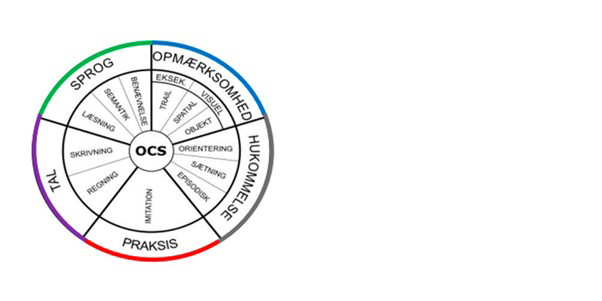
This project is concerned with improving the assessment of cognitive impairments after stroke: 12.000 people suffer from a stroke every year in Denmark, leading to acute and chronic cognitive impairments in over 50% of patients, including problems with memory, planning, language and concentration. It is crucial to identify the patients who are most likely to develop long-term post-stroke cognitive impairments (PSCI) as early as possible to guide and enable the implementation of appropriate, patient-centered neurorehabilitation. In 2020 we translated and released a Danish version of the cognitive screening tool OCS, designed for assessing 11 distinct cognitive subdomains in stroke survivors, which is now recommended by the Danish Health Authorities as the tool of choice for assessing PSCI.
However, OCS has not been validated against the gold-standard detailed cognitive assessment, and we know very little about its ability to predict long-term PSCI. Therefore, the OCS-PRECISE project is investigating how accurately the OCS classifies PSCI in stroke patients, by comparing its 11 subtests with matched detailed cognitive tests both in the acute (max 2 weeks post-stroke) and chronic stage (6-9 months post stroke). In addition, the project seeks to identify the prevalence of PSCI in stroke patients in both acute and chronic stages, as well as to examine how well results from OCS in the acute stage can predict long-term PSCI in the chronic stage.
As part of this project, we are also working on a Danish translation and validation of the parallel version OCS B to enable multiple uses of the screening tool with the same patient without the risk of retest effects.
OCS-PRECISE is funded by the Independent Research Fund Denmark (DFF).
This project is concerned with improving the assessment of visual perceptual impairments after stroke. 12’000 people suffer from a stroke every year in Denmark. Stroke can lead to a wide range of impairments including visual perceptual impairments. Visual perceptual impairments are associated with long term consequences on patient’s activities of daily living, are associated with lower quality of life and can give additional challenges in assessment and rehabilitation of other functions. It is therefore crucial that we are able to identify visual perceptual impairments early after stroke to provide appropriate support and rehabilitation.
We are working on making a short screening tool for visual perceptual impairments after stroke, the Oxford Visual Perceptual Screen (OxVPS), available in Danish with Danish reference material.
Researchers
PI: Ro. J Robotham.
Collaboration with Kathleen Vancleef, Durham University.
The ability to perceive and recognize faces is believed to vary in the general population from individuals who struggle to recognize even close friends and relatives (prosopagnosia) to individuals who excel at face processing (super recognizers). Additionally, face processing may be impaired in neurodegenerative disorders (e.g. dementia) as well as neurodevelopmental disorders (e.g. autism, developmental prosopagnosia). However, existing experimental measures of face processing ability struggle to capture the full variability of the general population and few are clinically useful, especially in a Danish context. Therefore, the current project aims to: (1) develop a test of face recognition appropriate for children and adolescents ages 7-15; (2) Develop and validate a new test of face recognition for adults and a psychometrically improved version of the self-report instrument PI20; and (3) Develop and validate a new version of the Danish Famous Faces Test. The project is funded by the Independent Research Fund Denmark.
The project is funded by Independent Research Fund Denmark.
Researchers
PI: Randi Starrfelt
Postdoc Erling Nørkær
External collaborators: Camilla Funch Uhre and Kasper Jørgensen
This project is concerned with improving the assessment of cognitive impairments after stroke. 12’000 people suffer from a stroke every year in Denmark. Stroke can lead to a wide range of cognitive impairments including problems with memory, planning, language and concentration. Patients typically experience some degree of recovery, however, over 50% of patients will have a long-term cognitive disability. Neurorehabilitation can improve long-term outcome. It is therefore crucial that we are able to identify the patients who are most likely to have long-term post-stroke cognitive impairments (PSCI) as early as possible to enable the implementation of appropriate patient-centered rehabilitation.
Traditionally, dementia screening tools have been used to identify cognitive impairments after stroke despite them not being well-suited for a stroke population. We are working to make stroke-specific cognitive screening tools such as the Oxford Cognitive Screen available in Danish and to learn more about how well these tools perform in comparison to comprehensive cognitive assessment.
PI: Ro. J Robotham.
Collaboration with Nele Demeyere, University of Oxford.
Hvordan får jeg fat i OCS-testen?
Bicultural Cognition (BiCON) - Effects of acculturation and bilingualism on measures of intellectual functioning.
The Wechsler Adult Intelligence Test (WAIS) is one of the most commonly used intelligence tests in the world and it is used in a wide range of contexts. The results of WAIS assessments can have important consequences on people’s lives, for example in the context of evaluations of parental ability and decisions related to sentencing (treatment versus incarceration). In such situations small measurements uncertainties can have important consequences. In Denmark, it is often assumed that bilingual children and adults who speak Danish fluently and have done their schooling in local Danish schools can be assessed using standard Danish norms without taking their language skills and cultural background into consideration. It is assumes, that they have the same prerequisites as other Danes. But this has never been investigated. Studies conducted in the USA have reported an association between performance on WAIS and measures of acculturation and bilingualism. A large body of evidence is emerging suggesting that cognitive tests and intelligence tests are highly culturally sensitive.
The aim of BiCON is therefore to investigate whether levels of acculturation and bilingualism affect performance of WAIS-IV and commonly used cognitive tests in a group of high-performing university students in Denmark, who have Arabic as their mother tongue.
Researchers
PI's: Ro J. Robotham and T. Rune Nielsen.
Cerebral palsy (CP) is characterized by motor impairment but often includes cognitive impairments. Cognitive impairments can be more or less subtle and are often overlooked, despite being associated with a wide range of academic and social problems. In Denmark, while individuals with CP receive systematic assessment of their physical function, not all are offered cognitive assessments. Usually assessments are only offered if there is a clear sign of a disability. International studies suggest that many children and youth with CP attending mainstream schools have cognitive impairments. Little is known about the cognitive profiles of children and youth with CP attending mainstream schools in Denmark.
The aim of CPCog-DK is therefore to characterize cognitive functioning in a group of children and adolescence with CP (11-15 years) attending mainstream schools, to document the type and extent of cognitive difficulties, to secure appropriate interventions and prevent the development of social and emotional problems. The project is a collaboration between Rigshospitalet, Copenhagen, Denmark, the Center for Rehabilitation of Brain Injury, Copenhagen, Denmark, Aarhus University Hospital and the University of Copenhagen, and is financed by the Elsass Foundation.
Member of steering committee: Ro J. Robotham.
Phenomenology of face blindness
Developmental prosopagnosia (DP) is a neurodevelopmental disorder that impairs face recognition. People with DP never learn to recognize others by their faces in the fast and automatic manner that characterizes unimpaired face recognition. Research on DP has increased substantially over the last ~15 years, and is mainly conducted within the fields of cognitive neuropsychology and neuroscience, using quantitative experimental, cognitive, and brain imaging techniques.
In the present project, we will investigate the ‘phenomenology of prosopagnosia’, using in-depth interviews to explore what it is like to be prosopagnosic and specifically how people with DP experience perceiving, imagining, and remembering faces. The project will contribute to a fundamental characterization of DP, which will increase our understanding of the nature of DP, inform cognitive theory, and may lead to novel hypotheses about the cognitive and perceptual deficits involved.
The project is funded by a project grant from the Independent Research Fund – Denmark.
Researchers
Project PI: Professor Randi Starrfelt.
Co-PI: Associate Professor Tone Roald.
Publication
Read Erling Nørkær’s PhD-thesis.
The Back of the Brain project (BoB)
The Back of the Brain project (BoB) is concerned with visual and cognitive deficits following stroke to posterior brain areas. This is a large, collaborative project, with key partners at University College London, University of Cambridge, and University of Manchester.
The aim of the project is to move beyond simple correlations between selective deficits in visual recognition (like pure alexia and prosopagnosia) and the corresponding lesions, and take a broader perspective on the deficits seen following lesions to posterior cortical areas. The project aims to bridge, integrate, and re(de)fine theories of visual recognition of different categories: words, objects, and faces. To achieve this aim, we have developed new experimental paradigms, and combine methods from neuropsychological single case approaches and experimental psychology with a large sample size, and high-resolution brain imaging.
This project was funded by a Sapere Aude - DFF Starting Grant from the Danish Council for Indpendent Research.
As part of this project, we have developed a freely available screening test for visual field deficits. Download the test.
Selected publications
- Robotham, R. J., Rice, G. E., Leff, A. P., Lambon Ralph, M. A., & Starrfelt, R. (2023). Systematic evaluation of high-level visual deficits and lesions in posterior cerebral artery stroke. Brain Communications, 5(2), [fcad050].
- Munk, A. H., Starup, E. B., Lambon Ralph, M. A., Leff, A. P., Starrfelt, R., & Robotham, R. J. (2023). Colour perception deficits after posterior stroke: Not so rare after all? Cortex, 159, 118-130.
- Rice, G. E., Kerry, S. J., Robotham, R. J., Leff, A. P., Lambon Ralph, M. A., & Starrfelt, R. (2021). Category-selective deficits are the exception and not the rule: Evidence from a case-series of 64 patients with ventral occipito-temporal cortex damage. Cortex, 138, 266-281.
- Thorudottir, S., Sigurdardottir, H. M., Rice, G. E., Kerry, S. J., Robotham, R. J., Leff, A. P. & Starrfelt, R. (2020). The Architect Who Lost the Ability to Imagine: The Cerebral Basis of Visual Imagery. Brain Sciences.
EnVISION - Cerebral Palsy
The EnVision-CP project was concerned with visual perceptual deficits in adults with cerebral palsy (CP). It is estimated that approximately 50-70% of children with CP have visual impairments that are caused by their cerebral damage or atypical cerebral development. However, systematic assessment is not part of current clinical practice in individuals with CP. Furthermore, studies investigating visual abilities in CP have focused on children and youth. Knowledge on visual impairments in adults with CP, and how the expression of these may change across development, is therefore limited.
The aims of the project were:
- To describe how youth and adults with CP experience vision impairments
- To describe the types of visual perceptual impairments that may be observed in youth and adults with CP
The project was funded by the Elsass Foundation, which aims to improve the quality of life for people with CP and their families.
Researchers
PI: Ro J. Robotham.
PhD student: Katrine Sand.
Publications
- Cognitive Functioning and Assessment in Adults with Cerebral Palsy: A Scoping Review
- Visual perception in adults with CP - assessment and individual differences: An exploratory study
Developing fatigue self-assessment tools for adults with cerebral palsy
Fatigue is one of the most common complaints for adults with cerebral palsy (CP) and can have severe consequences on everyday life. Fatigue is multifaceted and can be experienced in a multitude of ways. Fatigue self-assessment tools are often used by clinicians in order to guide interventions. There are many self-report assessment tools available for fatigue as it is a common complaint across many patient populations. However, these tools usually ask participants to compare their current experience of fatigue to how they experienced fatigue prior to their illness onset. These questions are not well suited for individuals with CP as they have had their disorder since the very early years of their life. Many self-report assessment tools have been used in adult with CP, however, only two have been designed specifically for this population. Little is known about these tools and how they compare. The overall aim of the project was therefore to compare measures of self-reported fatigue in a CP population to guide clinicians in their future practice. The project was a collaboration with the Elsass Foundation.
Researcher
PI: Ro J. Robotham
Publication
Contacts
 Randi Starrfelt Randi StarrfeltProfessor Phone +45 35 32 48 86 |
 Ro J. Robotham Ro J. RobothamAssociate professor Phone +45 35 33 18 67 |
Funded by
|
|
|
|

|

Researchers
| Name | Title | Phone | |
|---|---|---|---|
| Randi Starrfelt | Professor | +45 35 32 48 86 | randi.starrfelt@psy.ku.dk |
| Ro Robotham | Associate professor | +45 35 33 18 67 | jer@psy.ku.dk |
| Erling Nørkær | Postdoc | +45 35 32 55 66 | erling.nielsen@psy.ku.dk |
| Jacob Stoumann Fosgrau | PhD student | jacob.fosgrau@psyk.ku.dk | |
| Ida Degn Henriksen | Student assistant | idh@psy.ku.dk | |
| Matilde Just Sterup | Student assistant | bgt101@psy.ku | |
| Maya Tranter | Psychology student | maya.tranter@psy.ku.dk | |
| Rubina Fray Gogolu | Psychology student | jxh641@psy.ku.dk |